A review journal written by founders 0 shipped

FoundeReview

Review·Marketing & Sales

Vyera has my attention. What does the $149 actually put to work?

I built my own AI co-founder with Hermes and stopped running it. That makes me sympathetic to the price, and very curious about the resources behind the promise.


on VYERA

As a solo founder, an AI co-founder is a very attractive idea. If one of Vyera's agents could also give me a little encouragement now and then, I would appreciate that too. I have already tried building this for myself with Hermes Agent, deeply customized around the way I work. Even without particularly heavy workflows, the token consumption was alarming: surveys, outreach, finding SEO opportunities, mostly work to support me. Eventually I stopped running it. I have spent years in this industry and built specialist agent harnesses, so this was not my first attempt at wiring a few prompts together. That experience makes Vyera interesting to me. Its homepage promises one co-founder coordinating 26+ agents across marketing, visibility, strategy and execution. It is still coming soon, with a waitlist and a walkthrough promised for launch. This is a look at that public promise through my own experience, not a test of the working product.

One thing I’d changeI would love one concrete example showing what the starting plan can accomplish with the resources it includes. Take an SEO opportunity: show the data source, what the agent found, why it chose that opportunity, and the finished work it produced. Beside that, explain the included data/API allowances and anything I would have to supply or pay for separately. The DataForSEO and Firecrawl disclosures are a useful starting point; I would bring that information into the product and pricing explanation. For someone who has already built a personal setup, dependable access to useful data and a workflow that delivers are much more persuasive than the agent count. Generic web research alone would be hard to justify paying for again. I want to see where Vyera takes that work further.
Would I pay: Yes Continued →
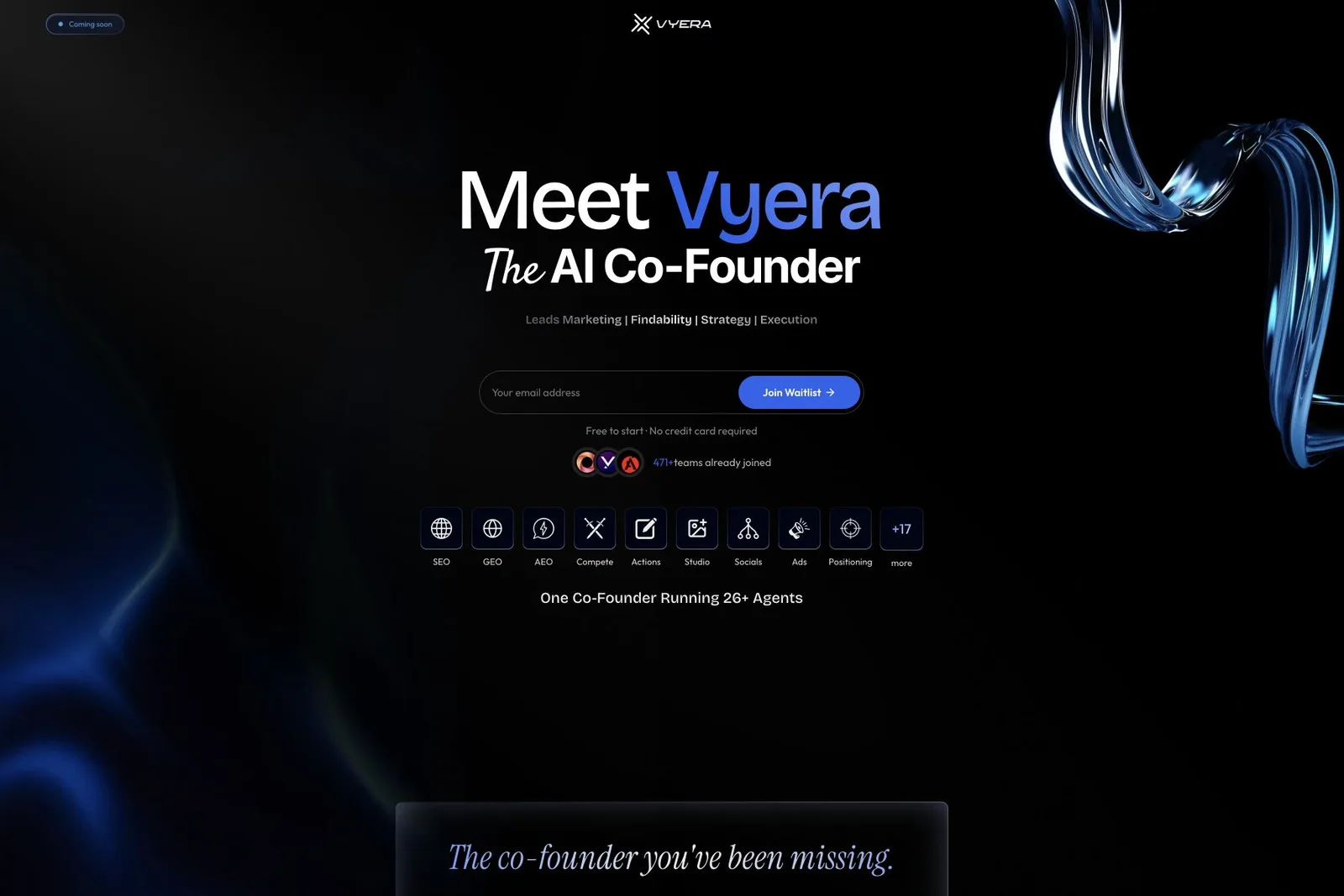
Vyera's dark coming-soon homepage shows a Coming soon badge, the headline Meet Vyera The AI Co-Founder, and an email address field paired with a Join Waitlist button, accompanied by the notes Free to start · No credit card required and 471+ teams already joined. Below, a row of icons labeled SEO, GEO, AEO, Compete, Actions, Studio, Socials, Ads, Positioning and +17 more precedes the line One Co-Founder Running 26+ Agents, with the partial heading The co-founder you've been missing. visible at the bottom.
Fig. 1Vyera’s coming-soon homepage promises one AI co-founder coordinating 26+ agents; the current entry point is a waitlist.
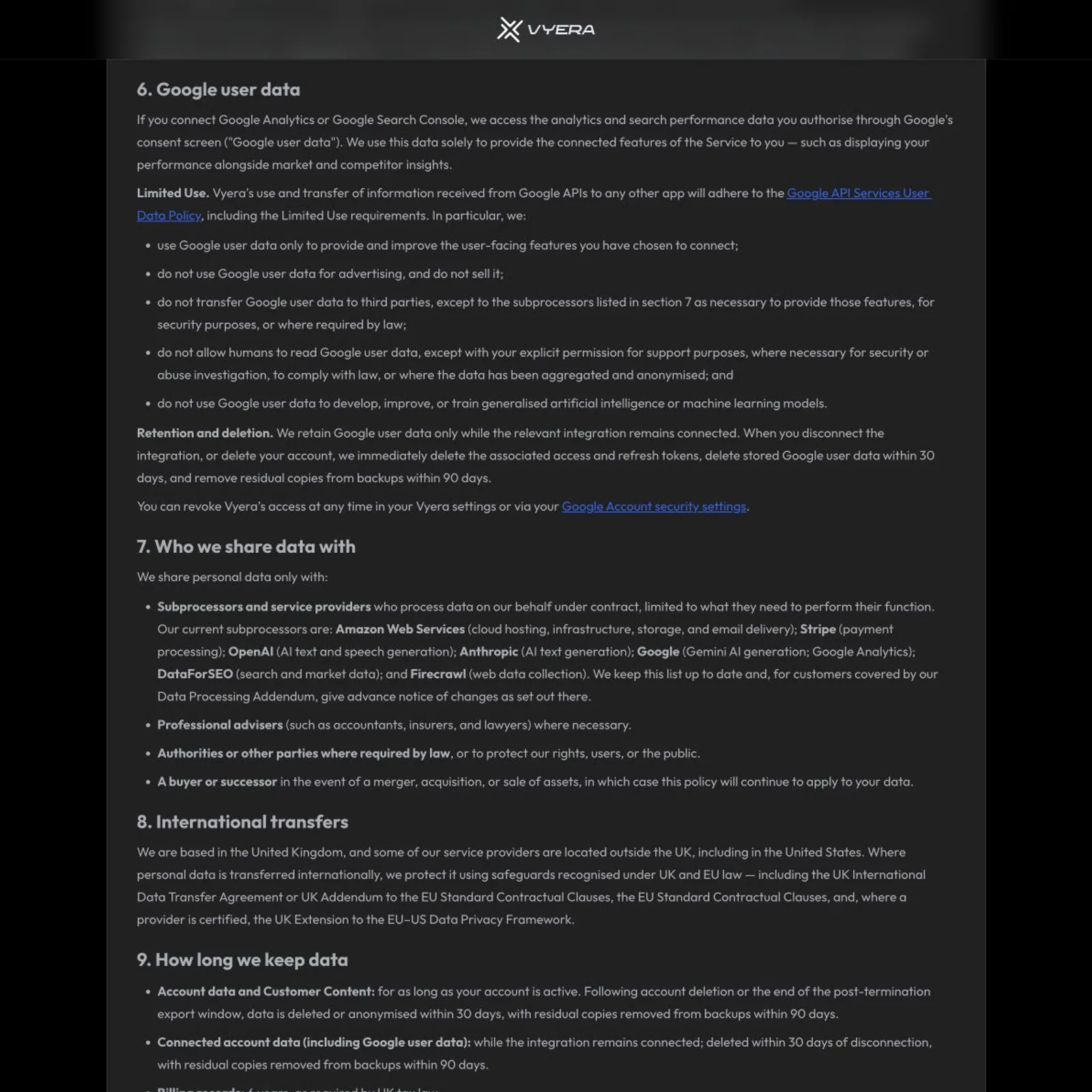
A screenshot of the Vyera privacy policy page shows section 7. Who we share data with, whose subprocessor list names DataForSEO (search and market data) and Firecrawl (web data collection) alongside Amazon Web Services, Stripe, OpenAI, Anthropic and Google, with sections 6. Google user data, 8. International transfers and 9. How long we keep data also visible above and below. No annotation marks appear on the cropped page.
Fig. 2The Privacy Policy names DataForSEO and Firecrawl among Vyera’s providers. This discloses resources, but not the entry plan’s allowances.
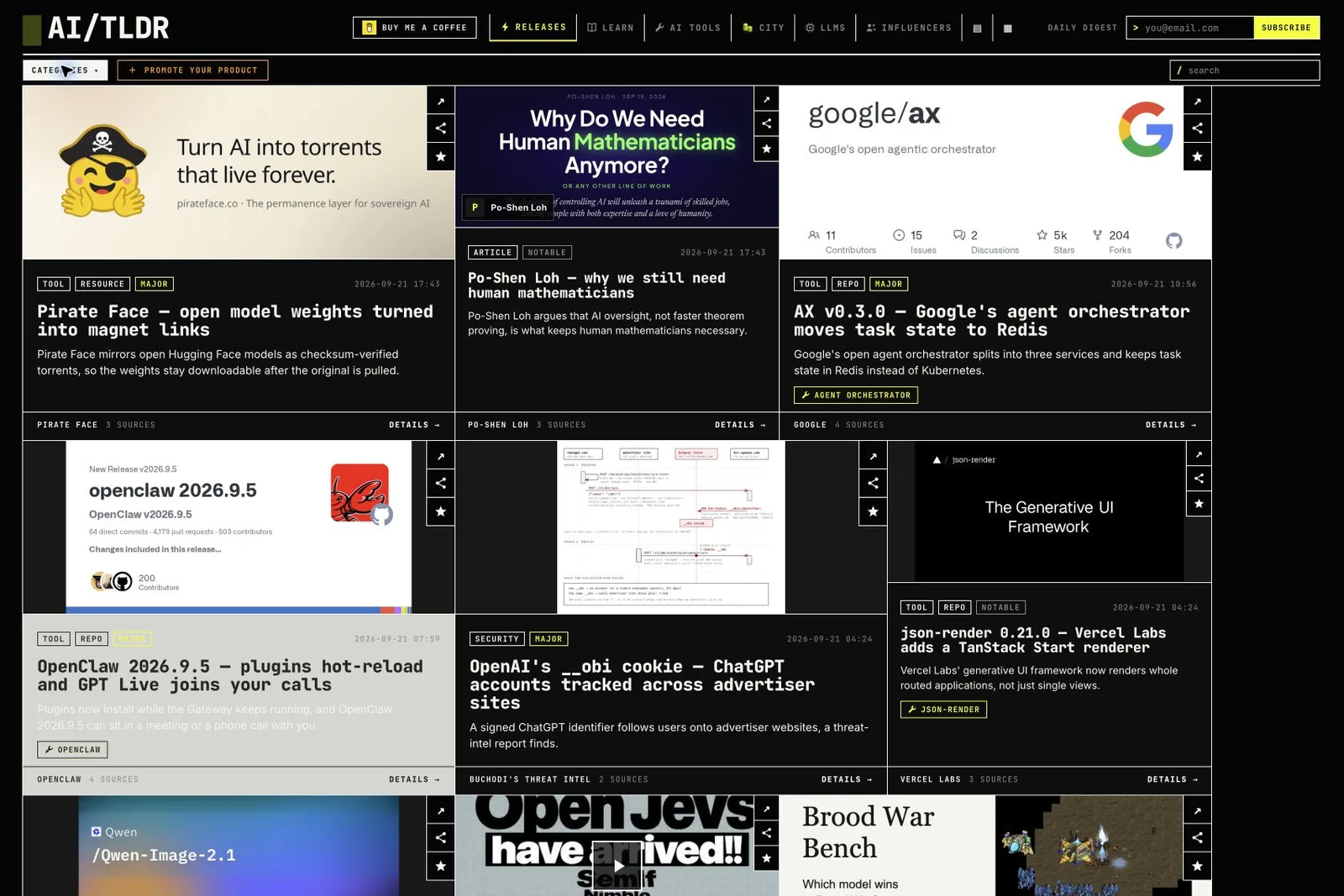
The AI/TLDR releases page shows a grid of feed cards in a black-and-yellow layout, each pairing category labels such as TOOL, REPO, MAJOR, ARTICLE and SECURITY with a headline, a one-line summary, and a footer listing source counts and a DETAILS link. A red annotation arrow circles the CATEGORIES dropdown in the toolbar above the feed, while the header offers an email field with a SUBSCRIBE button.
Fig. 1The release feed combines short summaries, category labels and source links in a distinctive black-and-yellow layout.

Review·Communities & Media

AI/TLDR fits my taste. Next, let it learn my interests.

A smooth, distinctive way to keep up with AI. Personal relevance filtering would make an already useful feed even harder to leave.

Yes
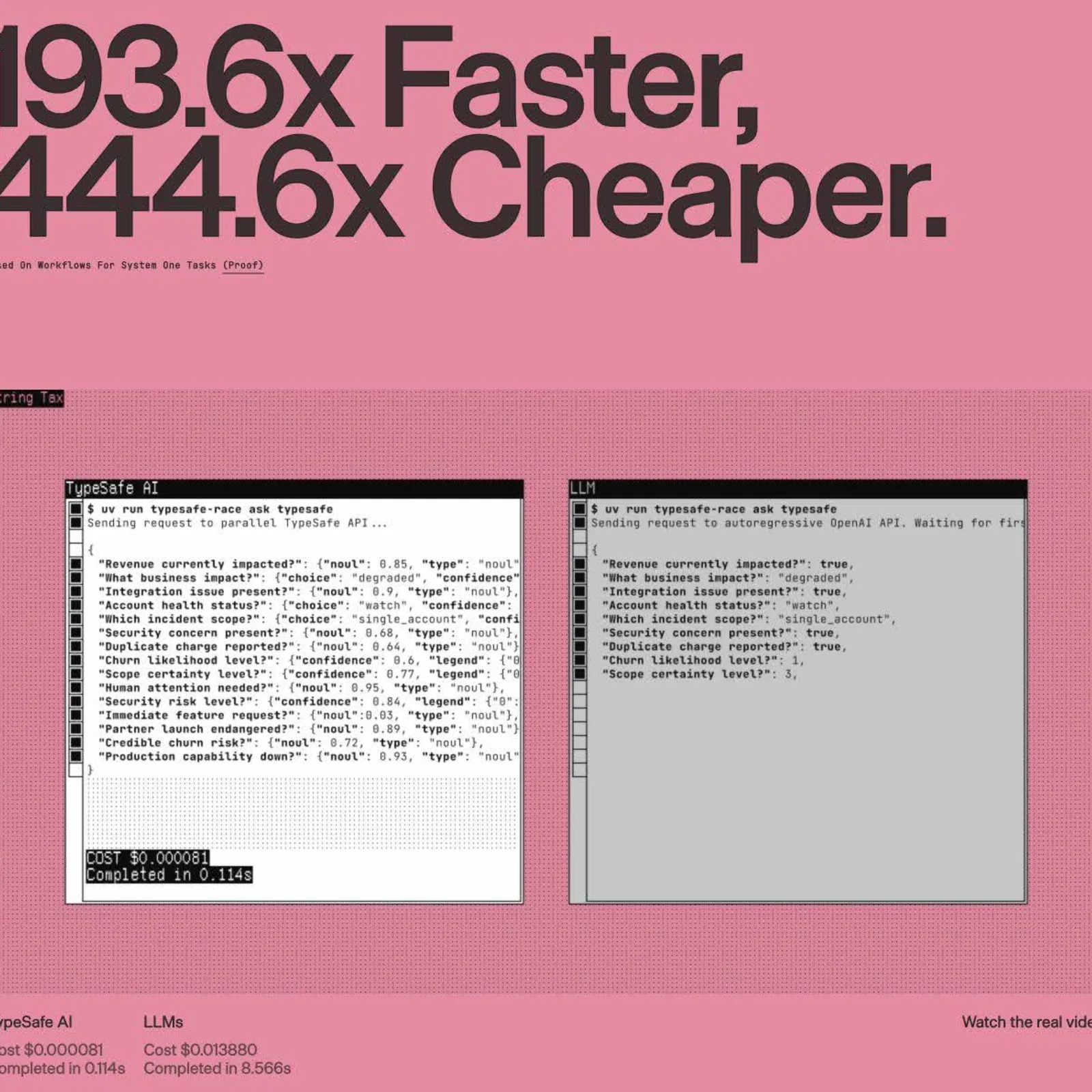
TypeSafe's homepage opens with the large headline 193.6x Faster, 444.6x Cheaper. above a footnote line about workflows for System One tasks ending in (Proof). Beneath it, two side-by-side terminal panels labeled TypeSafe AI and LLM run the same uv run typesafe-race ask typesafe command; the TypeSafe panel highlights COST $0.000081 and Completed in 0.114s, while the comparison row below lists Cost $0.013880 and Completed in 8.566s under LLMs.
Fig. 1TypeSafe's homepage leads with the best case — '193.6x Faster, 444.6x Cheaper,' footnoted as workflow-based. Below it, the launch demo's own numbers: $0.000081 in 0.114s against an LLM's $0.013880 in 8.566s.

Review·AI

The model that won't write: reviewing Jev from outside the waitlist

TypeSafe AI's first System One model answers only typed questions — Choice, Score, Noul — at $42 per billion input tokens. No key arrived, so this review runs on documents, one independent test, and a Discord full of early users.

Maybe
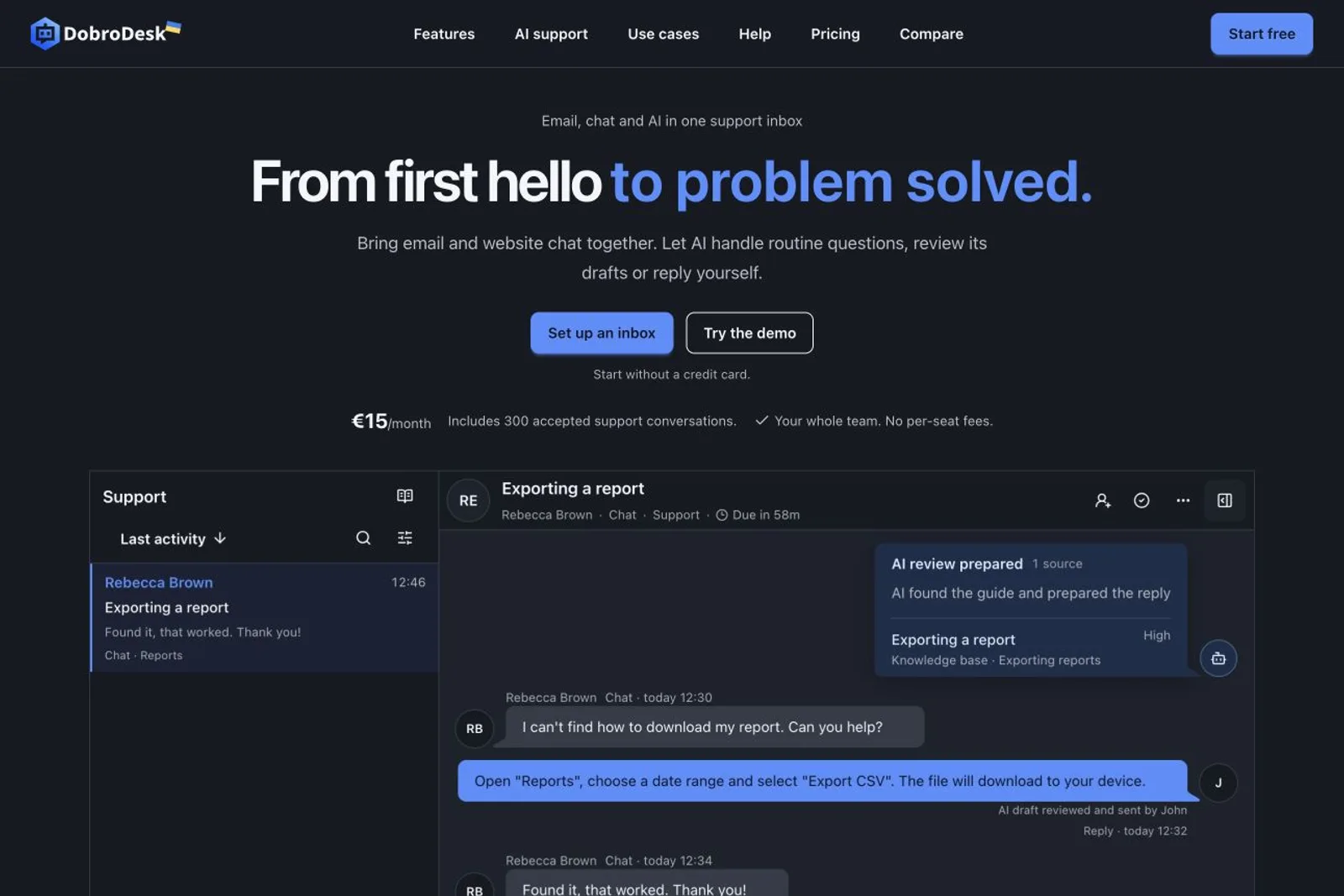
The DobroDesk homepage hero presents Email, chat and AI in one support inbox under the heading From first hello to problem solved., with Set up an inbox and Try the demo buttons and a starting price of €15/month that Includes 300 accepted support conversations. Beneath it, a product example shows a shared Support inbox listing a chat conversation titled Exporting a report, whose thread displays an AI review prepared card citing a knowledge base source alongside a drafted reply about exporting a CSV file.
Fig. 1The homepage explains the shared inbox, AI reply choices and starting price beside a product example.

Review·Marketing & Sales

DobroDesk made sense before I needed it.

My projects do not need this much support tooling yet. The website explains the offer clearly, and €15 a month makes building my own hard to justify.

Yes